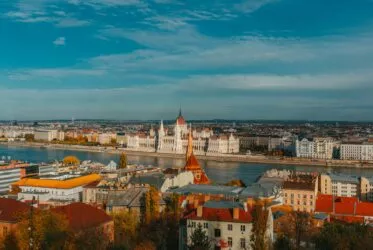
Small country, outsized opportunities. Luxembourg sits at the crossroads of Germany, France and Belgium, hosts major EU institutions and ranks among the world's leading financial centres. For students targeting finance, audit or international business, few places in Europe put you this close to the employers you are aiming for.
Key takeaways
- Luxembourg offers exceptional career access, with average gross salaries around €73,700 and a dense concentration of international banks, funds and audit firms in a country of modest size.
- The trade-off is cost: living expenses run €1,200 to €1,800 per month, among the highest in Europe, though free nationwide public transport and high graduate salaries offset part of the equation.
👉 In practice, Luxembourg makes most sense for students with a clear professional focus, particularly in finance, where proximity to employers translates directly into internships and job offers.

Why study in Luxembourg
Luxembourg does not compete on volume. It competes on concentration, and that changes what a student experience looks like.
- A global financial hub in a compact city. Luxembourg City hosts international banks, investment funds, audit firms and the headquarters of companies including ArcelorMittal, Ferrero and Amazon. The density means networking events, internships and employers are all within walking distance rather than scattered across a large metropolis.
- European institutions on site. The country hosts several EU bodies, including the European Court of Justice, the European Investment Fund and the European Investment Bank, creating career paths that barely exist elsewhere.
- Exceptional salary levels. The average gross annual salary reaches approximately €73,735, with average net take-home pay close to €3,960 per month. The minimum wage sits around €2,000 per month, among the highest in the world.
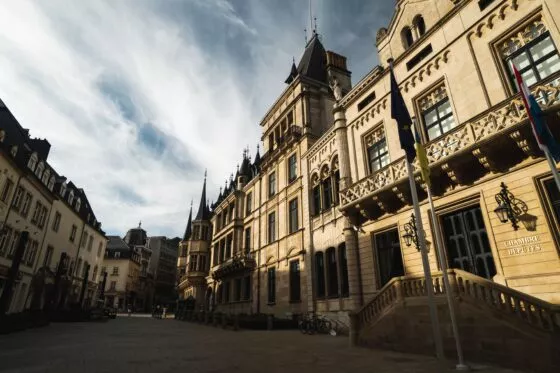
- A genuinely multilingual environment. English, French, German and Luxembourgish coexist in daily life, and most master's programmes are taught in English. This multilingual exposure becomes a real asset for anyone targeting an international career.
- Free public transport nationwide. Since March 2020, all trains, buses and trams are free across the entire country. For students, this removes a budget line that runs €50 to €100 per month elsewhere.
- Among the safest countries in the world. Combined with clean, well-planned cities and a high standard of living, this creates a stable environment that matters when adjusting to life abroad.
- A base for exploring Europe. Bordered by three countries and inside the Schengen Area, Luxembourg puts Brussels, Paris, Frankfurt and Cologne within easy reach.
Studying in Luxembourg at a glance
| Criterion | What to expect |
| Living costs | €1,200 to €1,800 per month |
| Student residence | €450 to €600 per month |
| Public transport | Free nationwide |
| Average gross salary | Around €73,700 per year |
| Languages | English, French, German, Luxembourgish |
| Residence permit (non-EU) | €80 one-off payment |
| Key sectors | Finance, funds, audit, EU institutions, fintech |
What you need to know before you go
Budgeting realistically
There is no getting around it: Luxembourg is expensive. Monthly living costs typically run €1,200 to €1,800 depending on your accommodation and lifestyle.
Housing is the dominant expense. A one-bedroom apartment in the city centre can reach €1,700 per month, which is why most students opt for student residences at €450 to €600 or shared housing. Groceries add €200 to €300 monthly.
Two things soften the picture. Free public transport eliminates commuting costs entirely, which also makes living slightly outside the city genuinely viable. And the high salary levels mean that paid internships and post-graduation earnings are proportionally strong, improving the return on your investment.
Visa and financial requirements
Non-EU students need to demonstrate sufficient financial resources, generally in the region of €1,500 per month for the duration of their studies. Requirements are updated regularly, so always verify current figures with the relevant authorities before applying.
The residence permit costs €80 as a one-off payment. Non-EU and non-EEA students must also take out private medical insurance covering at least €30,000, payable in monthly instalments.
Language
Most master's programmes are taught in English, and English is widely spoken in the business district. You do not need French, German or Luxembourgish to study or to work in the financial sector.
That said, the multilingual environment is one of the country's defining features. Picking up French or German during your time there measurably widens your options, both socially and professionally.
Housing, early
Student accommodation is limited relative to demand, and the private rental market is among Europe's most expensive. Start your search as early as possible, and consider shared housing or the neighbouring border regions, which free public transport makes considerably more practical than in most countries.
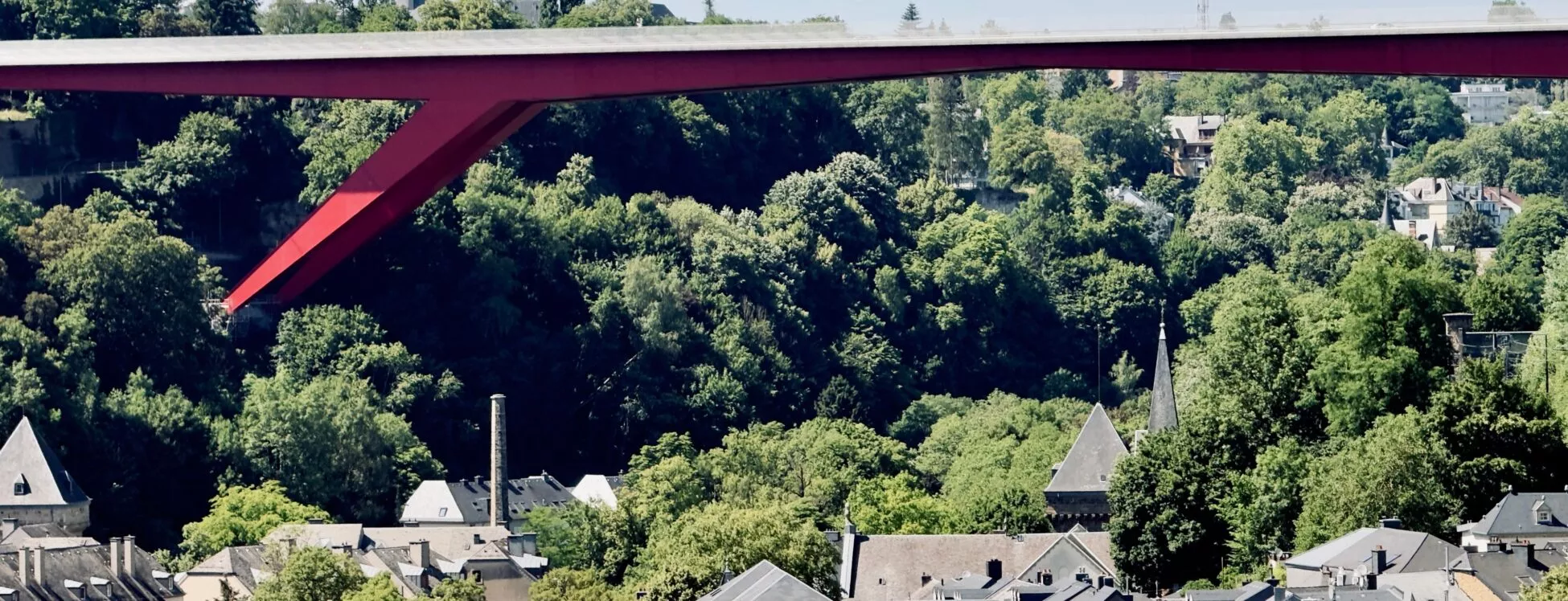
Studying in Luxembourg with ESSCA
Founded in 1909, ESSCA holds the triple accreditation AACSB, AMBA and EQUIS, and is currently the only Triple Crown accredited management school in Luxembourg. Its Master in Management features among the top 100 programmes worldwide in the Financial Times and ESSCA is part of the Shanghai ranking.
Present in the country since 2023, the school formally opened its Luxembourg campus in the Kirchberg business district, hosted within the Chambre des Métiers. The location is deliberate: it places students inside the business quarter while connecting them to an economic ecosystem that extends beyond finance alone, including SMEs, craft businesses and international groups.
The flagship programme is the Master in Management with a Finance specialisation, running since September 2025 and taught entirely in English. Oriented towards Investment Funds and Asset Management, it covers asset management, private equity, risk management, compliance, financial audit and financial markets. A six-month paid internship in the second year is built into the programme as a bridge into employment.
From the 2026 intake, the campus adds the Bachelor in International Management, accessible directly after secondary school. It follows the school's "3 years, 3 countries" principle, with each year of study potentially taking place in a different country: on one of ESSCA's international campuses, at a partner university, or in a company abroad.
One asset stands out for career prospects. The ESSCA Alumni Luxembourg network counts close to 200 active members working at firms including PwC, Deloitte, EY, KPMG, BDO, Rothschild, UBS, the European Investment Fund, Bank of America, Société Générale, Banque Internationale à Luxembourg, the European Court of Justice, the Banque Centrale de Luxembourg, ArcelorMittal, ING, Arendt & Medernach and Amazon. In a market this concentrated, that network carries real weight.
ESSCA also runs a Luxembourg Summer Programme focused on current trends in finance, including blockchain and decentralised finance, at the heart of Europe's financial hub.
Going further
Luxembourg suits students who know what they want. If finance, audit or fund management is your target, the proximity to employers is difficult to match elsewhere in Europe. Most programmes run webinars and information sessions where you can question programme directors and current students directly, which is the fastest way to assess whether the fit is right.
FAQ
Is Luxembourg expensive for students?
Yes, it is among Europe's more expensive countries, with living costs of €1,200 to €1,800 per month. Housing drives most of that. Two factors compensate: public transport is free nationwide, and salary levels are exceptionally high, which improves both internship pay and post-graduation earnings.
Can I study in Luxembourg in English?
Yes. Most master's programmes are taught in English, and English is widely used across the business district and in international companies. French, German and Luxembourgish are present in daily life, which is an advantage rather than a barrier.
What career opportunities does Luxembourg offer?
Primarily in finance, investment funds, audit, compliance and fintech, alongside European institutions such as the European Court of Justice and the European Investment Fund. Major international companies including ArcelorMittal, Ferrero and Amazon also have a significant presence.
Is Luxembourg a good place to study finance specifically?
It is one of the strongest options in Europe. The country is a global fund management centre, meaning the employers you would target are physically present in a compact city. Internships and networking are consequently far more accessible than in larger financial capitals.