Most guides ask you to pick a country. That framing is increasingly outdated. European business degrees are now built around structured mobility, meaning a single programme can take you through two or three countries before you graduate. The real question is not where to study, but how to combine destinations so that each one adds something your CV would otherwise lack.
Key takeaways
- Europe's main advantage over other study destinations is the ability to study across several countries within one degree, through campus networks, exchange agreements and dual-degree structures.
- Costs, teaching language and post-study rights vary considerably between European countries, which makes the combination you choose as consequential as any single destination.
👉 In practice, students who plan their path across two or three countries end up with a stronger professional profile than those who optimise for one, and it rarely costs more.

Why Europe works differently
Compared with single-country destinations, Europe offers structural advantages that are worth understanding before you apply.
- Short distances, real differences. A two-hour flight or train ride separates markets with genuinely distinct business cultures, languages and economies. Few regions let you experience that much variation in so little time.
- Established mobility frameworks. Erasmus+ and comparable schemes have made cross-border study routine rather than exceptional, with credit recognition systems that actually work. A common credit system.
- ECTS allows credits earned in one country to count towards a degree awarded in another, which is what makes multi-country paths administratively possible.

- Freedom of movement within the Schengen Area. Once you hold a residence permit in one Schengen country, moving between them for study, internships or travel becomes straightforward.
- English as a working language. Business programmes taught entirely in English are now standard across the continent, including in countries where English is not an official language.
- Wide cost variation. Monthly living costs range from around €500 in Central Europe to €1,800 in Luxembourg, which means you can balance an expensive year against a more affordable one.
Comparing the main destinations
The table below compares five European countries on the criteria that most affect a business student's decision. Each links to a detailed guide.
| France | Spain | Luxembourg | Hungary | |
| Living costs (monthly) | €800 to €1,500 | €700 to €1,200 | €1,200 to €1,800 | €500 to €900 |
| English-taught business programmes | Widely available | Growing rapidly | Standard at master's level | Over 500 programmes nationally |
| Standout sector | Luxury, aerospace, consulting | Technology, cybersecurity | Finance, funds, audit | Multinational service centres |
| Post-study work rights | 12 to 24 months | Available under conditions | Available under conditions | Available under conditions |
| Best suited to | Broad career options | Value and tech exposure | Finance specialisation | Lowest total budget |
A sixth destination sits outside Europe but belongs in the same conversation: China, and specifically Shanghai, which many European programmes now integrate as a semester or a dual-campus track for students targeting Asian markets.
The four ways to build a multi-country path
Understanding the available mechanisms matters more than comparing brochures. There are four, and they can be combined.
1. Exchange semesters
The most common route. You spend one or two semesters at a partner university while remaining enrolled at your home institution, with credits transferring back through ECTS. Typically no additional tuition is charged by the host institution.
What to check: the number and quality of partner institutions in the regions you care about, and whether placement is competitive or guaranteed.
2. Multi-campus schools
Some business schools operate their own campuses in several countries, which means you move between sites of the same institution rather than negotiating between two. Administratively simpler, and the academic continuity is stronger.
What to check: whether the campuses genuinely deliver full programmes or only host short mobility periods.
3. Dual and double degrees
You graduate with qualifications from two institutions, usually in two countries. Academically demanding and often selective, but the outcome is two recognised credentials rather than one.
What to check: whether both degrees are fully accredited in their respective countries, and what the additional requirements are.
4. International internships
Frequently overlooked, and often the most professionally valuable component. A six-month placement abroad demonstrates something a semester of coursework does not: that you can work in another country, not just study there.
What to check: whether placements are integrated into the curriculum, and what support the school provides for finding them.
What to consider before committing
Language of instruction is not the same as language of life
A programme taught in English does not mean you can navigate the country in English. In Luxembourg or the Netherlands, you probably can. In parts of France, Spain or Hungary, daily life and particularly internship access improve substantially with the local language.
Plan for this rather than discovering it after arrival. Most institutions offer local language courses, and taking them seriously changes the experience.
Budget the combination, not the average
If your path includes a year in Luxembourg and a year in Hungary, budgeting on a European average will mislead you in both directions. Build a year-by-year budget, and remember that some countries offset high costs in unexpected ways: Luxembourg's public transport is free nationwide, for instance, while Hungarian landlords typically require two months' deposit plus the first month upfront.
Check post-study rights early
These vary by country and change periodically. France currently allows graduates to remain 12 to 24 months to find employment. Other countries have their own frameworks. If staying in Europe after graduation is part of your plan, verify the current rules for the country where you intend to finish your degree, as that is usually what determines your options.
Accreditation travels, reputation is local
International accreditations such as AACSB, AMBA and EQUIS are recognised globally and provide a reliable quality signal across borders. National rankings, by contrast, mean little outside their home country. If you are building an international profile, weight the former more heavily.
How ESSCA approaches this
Founded in 1909, ESSCA holds the triple accreditation AACSB, AMBA and EQUIS, shared by only 1% of business schools worldwide, and its Master in Management ranks among the top 100 programmes globally in the Financial Times ranking.
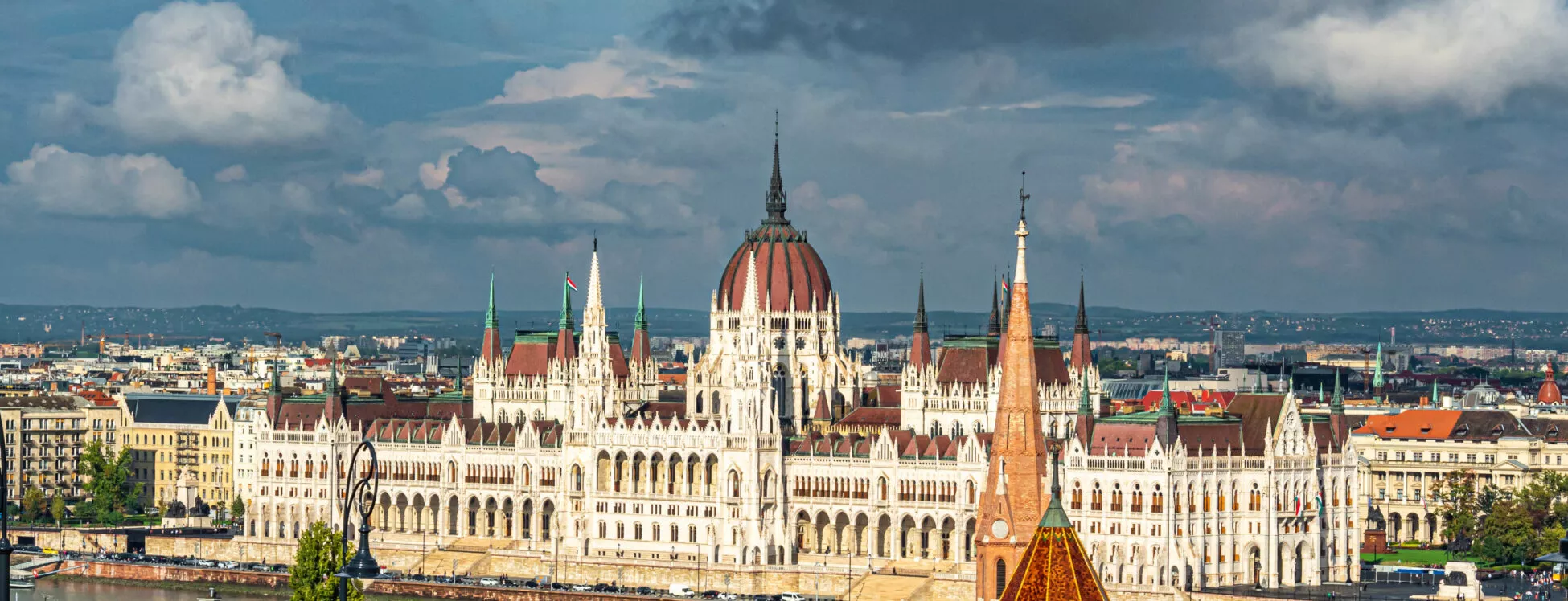
Its structure reflects the multi-country logic directly. The school operates ten campuses, nine of them in Europe: six in France (Paris but also Aix-en-Provence, Angers, Bordeaux, Lyon and Strasbourg), plus Malaga in Spain, Budapest in Hungary and Luxembourg, with Shanghai extending the network into Asia.
The Bachelor in International Management is built explicitly around a "3 years, 3 countries" principle: each year can take place in a different country, on an ESSCA campus, at a partner university, or in a company abroad. English-taught tracks are also available.
At master's level, the logic continues through campus specialisation. Luxembourg delivers the Master in Management with a Finance specialisation oriented towards investment funds and asset management. Shanghai hosts dual-campus MSc programmes in luxury and digital marketing, splitting time between Paris and China. Paris concentrates the broadest MSc portfolio.
Beyond its own campuses, the school works with partner universities across more than 50 countries.
Going further
The most useful preparation is to work backwards from where you want to end up professionally, then identify which two or three countries build towards that. A student targeting asset management and one targeting luxury retail should not follow the same European path, even within the same school.
Detailed country guides are available for France, Spain, Luxembourg, Hungary and China, covering costs, requirements and local specifics.
FAQ
Is it really possible to study in several European countries within one degree?
Yes, and it is increasingly standard. Four mechanisms make it work: exchange semesters, multi-campus institutions, dual degrees and international internships. The ECTS credit system and Schengen mobility make the administration manageable. Some programmes, such as ESSCA's Bachelor in International Management, are designed around this from the outset.
Which European country is cheapest for business students?
Among the destinations compared here, Hungary offers the lowest living costs at €500 to €900 per month, with dormitories from €80. Spain follows at €700 to €1,200. Luxembourg is the most expensive at €1,200 to €1,800, though free nationwide public transport and high graduate salaries change the calculation.
Do I need to speak the local language?
Not to study, in most cases: English-taught business programmes are widely available across Europe. But local language ability significantly improves internship access and daily life, particularly in France, Spain and Hungary. Treat it as an investment rather than a requirement.
Does moving between countries make my degree less recognised?
No, provided the awarding institution is properly accredited. What matters is the accreditation of the school granting your degree, not the number of countries you studied in. International accreditations such as AACSB, AMBA and EQUIS are recognised worldwide, whereas national rankings carry limited weight abroad.
(c) wirestock sur Magnific