In an ever-changing world, it has become a priority to bridge the gap between higher education and the realities of the labour market.
With this goal in mind and under the initiative of the Erasmus Student Network, the Erasmus Talent & Innovation Labs (ETI Labs) project was launched in January 2025.
Funded by the Erasmus+ programme, this initiative brings together universities, businesses, and regional stakeholders across Europe to co-develop innovative, sustainable learning pathways that are tailored to real-world needs.
ESSCA plays a central role in this project as an academic partner and scientific contributor. In particular, the School coordinated research investigating the needs of stakeholders (businesses, students, and higher education institutions) and existing university-business cooperation (UBC) models.
This work has just culminated in the publication of the report, « UBC for Transformation: A Literature Review on Student Competence Development in Sustainability, Entrepreneurship, and Digital Innovation », which lays the methodological foundation for the next phases of the ETI Labs project.
Co-authored by Florian Coltat-Gran and Margaux Langlois (ESSCA) and Giulia Moretto (AER), the report provides new perspectives on how University-Business Cooperation can become a catalyst for meaningful, future-oriented learning.
Rather than offering abstract theory, the report reflects on concrete practices, frameworks, and stakeholder needs that can turn cooperation into long-term impact.
Main points:
What is UBC and why does it matter?
UBC is more than partnerships, it’s a strategic collaboration between academia and business that fosters innovation, competitiveness, and practical learning opportunities.
Linking education to impact
The report shows how UBC can support ESG goals and aligns with major European competence frameworks like DigComp, EntreComp, and GreenComp, preparing learners for green, digital, and entrepreneurial transitions.
Who benefits and how?
- Businesses gain talent, innovation, and access to research
- Students build relevant skills and networks
- Universities enhance their curricula and societal relevance
- Regions strengthen ecosystems and reduce brain drain
Challenges to overcome
The report identifies common barriers to effective UBC, like lack of coordination, trust gaps, and uneven adoption across fields and regions, and proposes solutions for a more inclusive and connected landscape.
This work is part of a broader dynamic: ETI Labs is set to continue until the end of 2027 with the aim of strengthening the connection between education and innovation via internships, living labs, digital tools and shared quality standards.
ESSCA will remain actively involved in the project, in line with its commitment to responsible education focused on transitions and the employability of young graduates.
A Literature Review on Student Competence Development in Sustainability, Entrepreneurship, and Digital Innovation.
Find out more
 03/09/2026
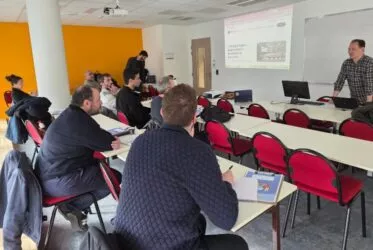
Green & Smart Cities: from student ideas to real‑world solutions for sustainable territories
Mobility, urban planning, recycling, vehicle charging and more — these major challenges for green & smart cities were at the heart of this event dedicated to AI–driven solutions.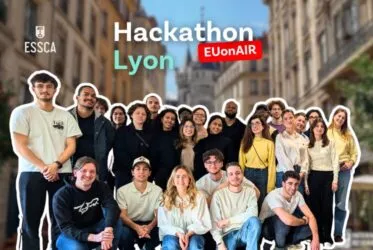 03/04/2026
EUonAir Hackathon 2026: how AI can enable professional training of vulnerable communities?
From 25 to 27 February 2026, ESSCA hosted the second Urban Innovation Challenge Hackathon on its Lyon campus, as part of the European EUonAir alliance. 02/17/2026
A look back at the conference “Happiness Lies in Action” with Dominique SCHELCHER
On 29 January, Dominique SCHELCHER, ESSCA alumnus and CEO of the U Cooperative, spoke as part of the 10th edition of the Fil Rouge on the theme “Happiness Lies in Action”.