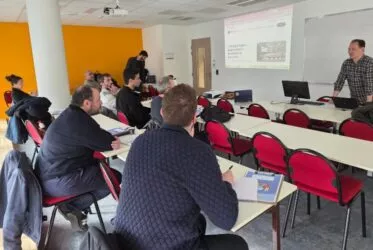
Le Professeur Ammar Ali GULL, enseignant à l’ESSCA School of Management, a écrit un article intitulé « Beyond gender diversity: How specific attributes of female directors affect earnings management », publié par Science Direct.
https://www.sciencedirect.com/science/article/pii/S0890838917300513
Abstract
We apply the system GMM regression estimation approach to a matched sample of French firms listed on Euronext Paris during the period 2001–2010 in order to investigate the relationship between female directors and earnings management by considering their specific (statutory and demographic) attributes. We first find that the presence of female directors deters managers from managing earnings. However, this finding does not hold when the statutory and demographic attributes of female directors are taken into account, thus showing that the detection and the correction of earnings management require particular competencies and skills. Interestingly, we find that business expertise and audit committee membership are key attributes of female directors that promote the effective monitoring of earnings management. An important implication of our findings is that the decision to appoint women on corporate boards should be based more on their statutory and demographic attributes than on blind implementation of gender quotas. Finally, our supplementary analysis reveals that female CEOs and CFOs are strongly inclined to reduce earnings management.
À lire aussi
 04/03/2026
Hackathon EUonAir 2026 : l'IA peut-elle réduire les inégalités d'accès à l'emploi ?
Du 25 au 27 février 2026, l'ESSCA a accueilli sur son campus Lyonnais le 2ᵉ Hackathon Urban Innovation Challenge, organisé dans le cadre de l'alliance EUonAir.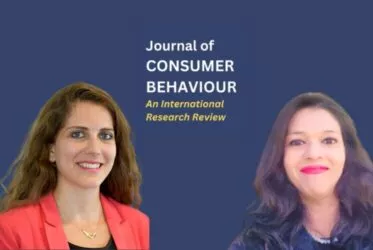 25/02/2026
Deux professeures de l’ESSCA rejoignent le comité éditorial du Journal of Consumer Behaviour
Deux professeures de marketing de l’ESSCA viennent d’être nommées à des fonctions éditoriales importantes au sein du Journal of Consumer Behaviour, une revue internationale de référence pour ses travaux sur les dynamiques de consommation et les évolutions du comportement des consommateurs.